Left Hand Drive vs Right: Guide for China Car Import 2025
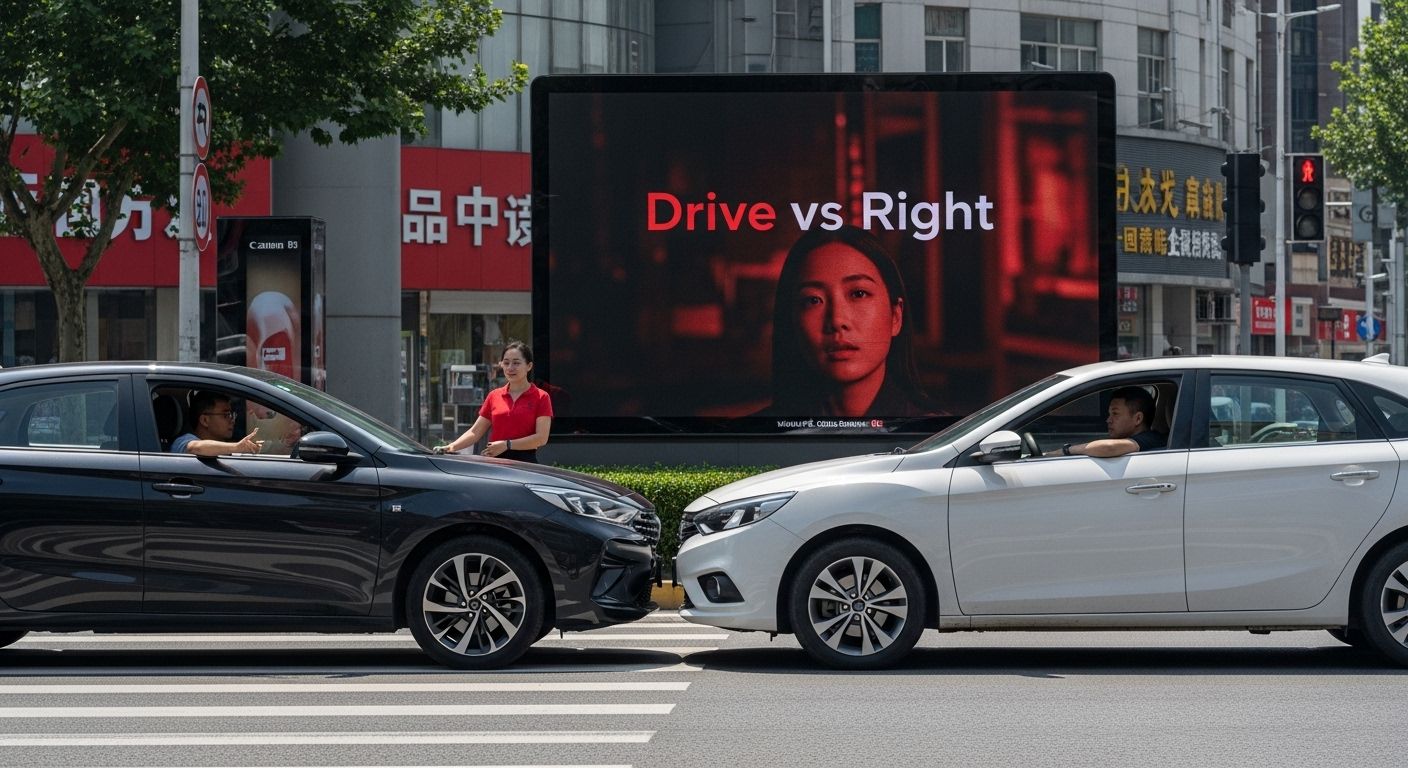
Choosing between left hand drive and right hand drive cars can completely transform your driving experience. You might assume it is a matter of preference or habit, but several studies prove otherwise. In fact, right-hand-drive vehicles driven in left-hand-drive settings face a much higher risk of at-fault crashes, which makes drive orientation a far bigger deal than most imagine.
Table of Contents
Quick Summary
Takeaway | Explanation |
|---|---|
Understand LHD vs RHD impacts | Differences in drive orientation affect visibility and interaction with road infrastructure. Understanding these is essential for safe driving and compliance. |
Adhere to China’s LHD regulations | China mandates left-hand drive configurations for vehicle imports, limiting options for importers and simplifying compliance requirements. |
Conduct thorough technical evaluations | Comprehensive technical checks on vehicles, including documentation and physical condition, are crucial for ensuring compliance and reliability. |
Plan for all financial aspects | Import costs extend beyond purchase price to include duties, shipping, and modifications. Preparing for these financial implications is vital. |
Choose reliable suppliers | Establish strong relationships with reputable manufacturers to ensure quality and adherence to international standards, minimising import risks. |
Key Differences: Left Hand Drive vs Right
Understanding the fundamental differences between left hand drive (LHD) and right hand drive (RHD) vehicles is crucial for car importers and international automotive enthusiasts. These variations extend far beyond simple steering wheel placement and significantly impact driving experience, safety, and legal compliance.
Ergonomic and Visibility Challenges
The core distinction between LHD and RHD vehicles lies in the driver’s seating position relative to the road. According to research published in PLOS, mismatches between vehicle configuration and local traffic rules can create substantial ergonomic challenges. In LHD vehicles, the driver sits on the left side of the vehicle, which is standard in countries like the United States and most of continental Europe. Conversely, RHD vehicles position the driver on the right side, common in countries such as the United Kingdom, Japan, and Australia.
These differences are not merely cosmetic. The driver’s positioning dramatically affects visibility, spatial awareness, and interaction with road infrastructure. When importing a vehicle from one driving orientation to another, drivers must adapt to significantly altered peripheral vision, gear shifting mechanics, and road interaction patterns. For instance, an LHD driver accustomed to right-side overtaking might initially struggle with the reversed perspective in an RHD vehicle.
Safety Implications and Crash Risk
Safety becomes a critical consideration when comparing LHD and RHD vehicles. A comprehensive study published in PubMed revealed that right-hand-drive vehicles operated in left-hand-drive environments demonstrated a markedly higher risk of at-fault crash involvement. While the crash severity remained comparable between LHD and RHD vehicles, the increased probability of accidents underscores the importance of understanding and adapting to different driving configurations.
Key safety disparities emerge in several critical areas. Drivers must recalibrate their spatial judgment when changing from one drive orientation to another. Overtaking maneuvers, lane changing, and judging vehicle margins become more complex. The psychological and muscle memory adaptations required can take significant time and practice, making initial driving experiences potentially challenging and potentially hazardous.
Legal and Practical Considerations
Beyond ergonomic and safety concerns, legal frameworks surrounding vehicle importation and registration create additional complexity. Many jurisdictions have strict regulations about importing vehicles with non-standard drive configurations. Some countries completely prohibit the registration of RHD vehicles in predominantly LHD regions, while others impose rigorous inspection and modification requirements.
Practical considerations extend to maintenance and modification costs. Importing a vehicle with a non-standard drive orientation might necessitate expensive retrofitting, including repositioning steering components, adjusting dashboard layouts, and potentially modifying critical safety systems. These transformations can be technically challenging and financially prohibitive, making thorough research and professional consultation essential before pursuing such imports.
For car importers and automotive enthusiasts, understanding these nuanced differences between left hand drive and right hand drive vehicles is not just academic—it’s a practical necessity. Careful consideration of ergonomics, safety implications, and legal frameworks can help navigate the complex landscape of international vehicle acquisition and use.
To provide a clear overview, the following table compares the key aspects of left hand drive and right hand drive vehicles as discussed above:
Aspect | Left Hand Drive (LHD) | Right Hand Drive (RHD) |
|---|---|---|
Driver’s Position | Left side of vehicle | Right side of vehicle |
Common Countries | USA, most of Europe | UK, Japan, Australia |
Road Positioning | Suited for right-hand traffic | Suited for left-hand traffic |
Visibility Challenges | Minimal in LHD regions | Increased in LHD regions |
Legal Acceptance in China | Mandated/Required | Not permitted for road registration |
Crash Risk (out of region) | Lower (native region) | Higher in LHD environments |
Modification Costs | None/minimal when matched | High if imported into LHD regions |
Choosing the Best Option for China Car Import
Navigating the complexities of importing vehicles into China requires strategic understanding of regulatory frameworks, market dynamics, and technical specifications. Car importers must carefully evaluate multiple factors to ensure successful and compliant vehicle acquisition.
Regulatory Compliance and Vehicle Configuration
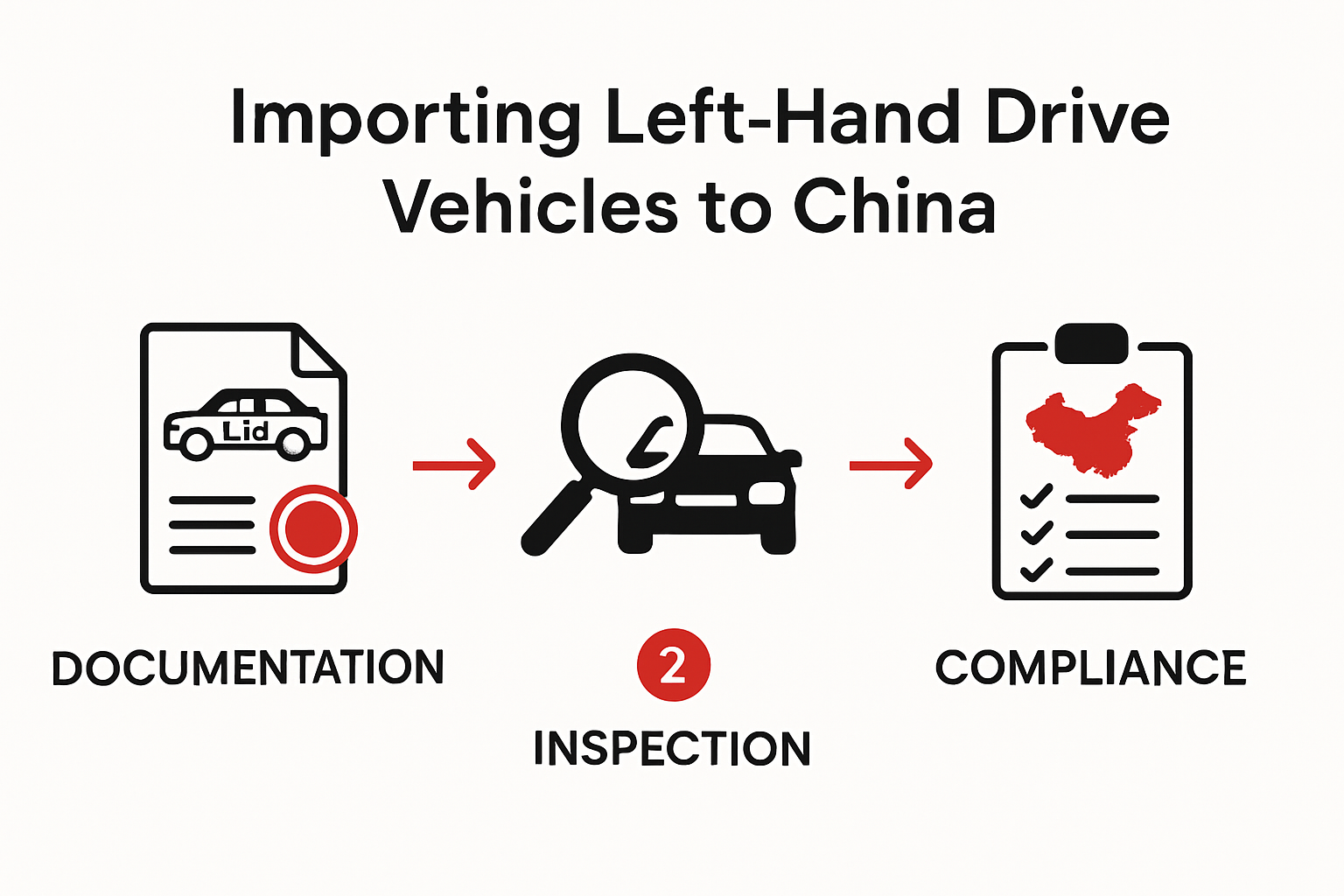
According to official automotive policy, China strictly mandates left-hand drive (LHD) vehicle configurations for road use. Historical traffic regulations adopted in 1946 established right-hand traffic (RHT) as the national standard, meaning all imported vehicles must conform to LHD specifications. This regulatory requirement eliminates right-hand drive (RHD) vehicles from consideration, simplifying the selection process for importers.
Importers must meticulously verify each vehicle’s technical specifications, ensuring complete alignment with Chinese automotive standards. This involves comprehensive documentation review, including vehicle homologation certificates, technical inspection reports, and emissions compliance certificates. Failure to meet these stringent requirements can result in significant financial losses and potential import rejection.
Economic and Technical Evaluation Strategies
Beyond regulatory compliance, successful car importation demands thorough economic and technical assessment. Importers should conduct detailed cost-benefit analyses that encompass multiple dimensions. These include initial purchase price, import duties, transportation expenses, potential modification costs, and long-term maintenance considerations.
Technical evaluation requires examining vehicle specifications such as engine performance, fuel efficiency, safety features, and compatibility with Chinese automotive infrastructure. Factors like spare parts availability, service network coverage, and potential technological adaptations become critical decision-making parameters. Some imported vehicles might require additional engineering modifications to meet local technical standards, adding complexity and expense to the importation process.
Strategic Sourcing and Risk Mitigation
Effective vehicle sourcing involves developing robust procurement strategies that balance quality, cost, and regulatory compliance. Importers should establish relationships with reputable manufacturers and dealers who understand international automotive regulations. Comprehensive due diligence includes verifying manufacturer credentials, examining vehicle history, and conducting thorough technical inspections before finalizing any import transaction.
Risk mitigation strategies must address potential challenges such as currency fluctuations, shipping complexities, and potential regulatory changes. Successful importers often collaborate with specialized logistics partners and legal consultants who can provide expert guidance through the intricate import landscape. Learn more about our comprehensive car import services to streamline your vehicle acquisition process.
Choosing the optimal vehicle for China car import demands a multifaceted approach that balances regulatory compliance, economic considerations, and technical specifications. Importers who invest time in comprehensive research and strategic planning will successfully navigate the complex international automotive marketplace, ensuring smooth and profitable vehicle acquisitions.
Below is a summary table outlining key considerations and actions for successful car import into China:
Consideration | Key Action or Requirement |
|---|---|
Regulatory Compliance | Ensure LHD configuration and Chinese standards alignment |
Technical Verification | Review homologation, inspections, and emissions certificates |
Economic Evaluation | Analyse purchase price, duties, shipping, modifications, maintenance |
Sourcing & Due Diligence | Partner with reputable manufacturers; verify credentials |
Risk Mitigation | Manage currency, logistics, regulatory shifts; consult experts |
Import Rules and Market Trends for 2025
The automotive import landscape for 2025 presents a complex ecosystem of regulatory challenges, technological advancements, and strategic market opportunities. Car importers must navigate an increasingly sophisticated environment that demands precision, adaptability, and deep understanding of emerging trends.
Regulatory Framework and Environmental Standards
According to the General Administration of Customs of China, imported motor vehicles must rigorously comply with national environmental standards. This mandate focuses on promoting energy conservation and emission reduction through comprehensive vehicle inspections. Customs authorities will meticulously evaluate imported vehicles across multiple dimensions, including exterior appearance, on-board diagnostics, and exhaust pollutant emissions.
These stringent environmental regulations reflect China’s commitment to sustainable automotive development. Importers must ensure their vehicles not only meet technical specifications but also align with increasingly sophisticated green technology requirements. This means investing in vehicles with advanced emission control systems, efficient powertrain technologies, and demonstrated environmental performance.
Market Dynamics and Economic Incentives
Research from the U.S. Trade Department indicates China remains the world’s largest vehicle market, with domestic production projected to reach 35 million vehicles by 2025. The market is characterized by complex trade dynamics, including a standard 15% tariff on imported vehicles from most trading partners.
Interestingly, government initiatives announced in 2025 include a substantial 300 billion yuan ($41.4 billion) investment in consumer goods trade-in programs. This significant financial injection aims to stimulate the automotive market, potentially creating new opportunities for importers willing to adapt to evolving market conditions.
Strategic Import Considerations
Successful vehicle importation in 2025 demands a multifaceted approach. Importers must develop sophisticated strategies that balance regulatory compliance, technological innovation, and market responsiveness. This involves continuous monitoring of policy changes, understanding emerging consumer preferences, and maintaining flexibility in procurement approaches.
Key strategic considerations include developing robust supply chain networks, investing in vehicles with advanced technological features, and maintaining strict adherence to environmental and safety standards. Importers who can quickly adapt to regulatory changes and anticipate market trends will be best positioned to succeed in this dynamic environment.
The 2025 automotive import landscape represents a nuanced interplay of technological innovation, regulatory complexity, and economic opportunity. Importers must approach this market with strategic insight, technological understanding, and a commitment to meeting increasingly sophisticated regulatory standards.
Tips for Buying China Cars with Confidence
Purchasing vehicles from China requires a strategic approach that balances thorough research, technical understanding, and careful verification. Successful car acquisition demands more than surface-level evaluation and involves comprehensive due diligence across multiple dimensions.
Technical Verification and Documentation
Before committing to any vehicle purchase, importers must conduct exhaustive technical verification. This process extends beyond basic specifications and requires deep examination of vehicle documentation, mechanical condition, and compliance certifications. Crucial steps include obtaining comprehensive vehicle history reports, verifying manufacturer credentials, and confirming all technical specifications align with international automotive standards.
Critical documentation should include original manufacturing certificates, detailed technical inspection reports, emissions compliance documents, and comprehensive maintenance records. Professional importers recommend obtaining independent third-party technical assessments that provide unbiased evaluations of vehicle condition, potential mechanical issues, and long-term reliability projections.
Financial and Logistical Considerations
Navigating the financial landscape of international vehicle importation requires sophisticated planning and risk management. Importers must develop comprehensive cost models that account for multiple expense categories beyond the initial purchase price. These include import duties, transportation costs, potential modification expenses, customs clearance fees, and potential technical adaptation requirements.
Strategic financial planning involves understanding complex currency exchange dynamics, managing potential tariff fluctuations, and establishing robust financial risk mitigation strategies. Check out our comprehensive guide on vehicle import logistics to gain deeper insights into managing these intricate financial considerations.
Quality Assurance and Supplier Evaluation
Selecting reputable suppliers becomes paramount in ensuring vehicle quality and minimizing potential import risks. Successful importers develop rigorous supplier evaluation frameworks that assess manufacturers across multiple critical dimensions. These include production capabilities, quality control processes, technological innovation, compliance history, and international reputation.
Recommended evaluation strategies involve conducting comprehensive background checks, requesting detailed manufacturer portfolios, examining previous export records, and potentially arranging direct factory inspections. Establishing direct communication channels with manufacturers allows importers to gain nuanced insights into production processes, technical capabilities, and potential customization options.
Confident vehicle importation from China demands a holistic approach that integrates technical expertise, financial acumen, and strategic supplier relationships. Importers who invest time in comprehensive research, maintain flexibility, and develop robust verification processes will successfully navigate the complex international automotive marketplace. The key lies in approaching each vehicle acquisition as a multifaceted strategic decision rather than a simple transactional process. 
Frequently Asked Questions
What is the difference between left hand drive and right hand drive vehicles?
Left hand drive (LHD) vehicles have the driver’s seat on the left side, commonly used in countries like the USA and most of Europe, while right hand drive (RHD) vehicles have the driver’s seat on the right side, typical in countries such as the UK, Japan, and Australia. This orientation affects visibility, spatial awareness, and driving experience.
Why is left hand drive required for car imports in China?
China mandates left hand drive configurations for vehicle imports to ensure compatibility with its road traffic regulations, which are based on left-hand traffic principles. This regulatory requirement simplifies compliance for importers by prohibiting right hand drive vehicles.
What are the safety implications of driving a right hand drive vehicle in a left hand drive country?
Driving a right hand drive vehicle in a left hand drive country can significantly increase the risk of at-fault crashes due to visibility challenges and difficulties in judging distances on the road. Research shows these vehicles are more prone to accidents in non-native driving settings.
How can I ensure compliance when importing a vehicle into China?
To ensure compliance while importing a vehicle into China, you must verify the vehicle’s technical specifications, including homologation and emissions compliance certificates. It’s crucial to conduct thorough documentation checks and ensure that the vehicle follows Chinese automotive standards.
Ready to Import the Correct Car for Success in China?
Choosing between left hand drive and right hand drive is not just a technicality. For international car importers focused on the Chinese market, the risks of choosing the wrong configuration are real. You want safety and full legal compliance, but fears about visibility challenges, rejected shipments and wasted investments are valid. This article explained how a single mismatch in drive orientation can lead to higher crash risk and legal headaches. Our export solutions bridge these gaps by delivering only vehicles that meet Chinese LHD requirements, so you never lose out on opportunities.
Why wait and stress over technical verifications and regulatory pitfalls? Visit Nomad Cars to discover how our export team simplifies every stage of the buying process. Get access to the latest EV and petrol vehicles, plus detailed compliance checks and logistics expertise. Secure your next import confidently by browsing our vehicle import logistics guide or speak with a specialist today. The right car and the right support are just a click away.


Комментарии
Отправить комментарий